Why prompt modeling is the foundation of AI visibility


Most brands are measuring AI visibility backward : they start with the answer, then they measure the output and they build reporting on top.
That worked in search, but it doesn’t work in AI. AI didn’t just change the interface; it changed the shape of demand.
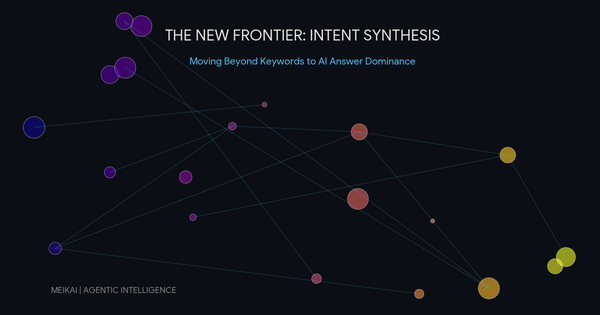
The same intent now appears through dozens of different prompts: different phrasings, different contexts, different ways of asking for the same outcome.
Two consumers can want the exact same thing and never use the same sentence. One asks, "What's the best enterprise CRM?" while another types, "Help me find a software to organize my global sales team so I stop losing leads."
So the real question is, “Am I even measuring the right questions?” and most brands aren’t.
They track a narrow set of prompts, see stable metrics, and assume their visibility is under control while it isn’t.
They’re just measuring a simplified version of reality. And once the input is wrong, everything breaks downstream: visibility scores, competitor benchmarks, and optimization priorities.
But there is a deeper shift happening, and we already observe this across enterprise brands. Just look at the data from one of our typical French customers in 2026: AI interactions are growing faster than AI-driven traffic. 535 ChatGPT user fetches generated only 6 visits, versus 1,859 from Google Search. The interaction is shifting upstream, inside the answer.
As seen below, OpenAI is fetching this content in real time to help power ChatGPT answers. These aren’t bots indexing for ranking, they’re feeding answers that replace the click.


The interaction is happening, but the click is not.
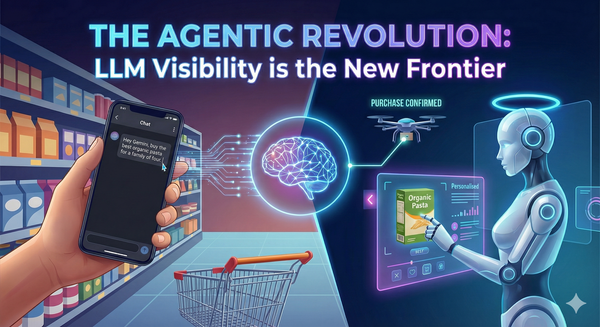
The decision is increasingly made inside the answer: not on your website, not on a search results page, but inside the model itself.
That’s why AI visibility doesn’t start with dashboards; it starts with capturing the conversational long-tail.
At Meikai, we built Prompt Studio to make that layer measurable and actionable.
We combine real consumer prompts, search and site signals, and direct AI interaction data, then structure them across personas, topics, and prompt clusters. Most importantly, we don’t just report what happened: we help teams refine and expand the prompt baseline over time.
Our optimization agents help identify missing demand segments, detect where your brand is absent, and prioritize the highest-impact optimizations
So teams don’t have to interpret the dashboard, they act on outcomes.
In AI, visibility is not a ranking problem: it’s a representation problem.
If you don’t map user intent comprehensively, you’re not just invisible, you’re playing the wrong game.
And in a world where AI answers are becoming the new homepage of the internet, the brands that win won’t be the ones who rank higher. They’ll be the ones who are consistently selected inside the answer.