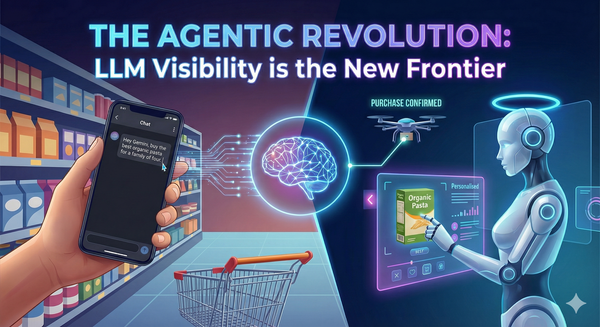
Prompt targeted ads are coming to ChatGPT and brands are already racing to “Map the Conversation”

OpenAI’s move to begin testing advertising inside ChatGPT is more than a new media placement, it’s a structural shift in how intent gets packaged, priced, and sold. In the early framing, ads sit below answers, are tied to the immediate conversation, and are designed to stay separate from the model’s organic response.
That nuance matters, because it changes the optimization target. The unit of value isn’t the keyword anymore. It’s the prompt plus the chain of context that leads up to it.
At Meikai, a startup focused on “AI visibility,” we are betting that the brands that win this channel won’t simply outbid rivals. They’ll out-understand how conversational intent clusters, how assistants frame needs, and which prompt shapes trigger commercial moments.
From keywords to conversation context: the new targeting primitive
In paid search, marketers learned to treat queries as demand signals then built a playbook around keyword lists, match types, landing pages, and conversion tracking. In an AI interface, the consumer doesn’t “search” so much as explain and the system interprets meaning across natural language.
That shifts targeting from:
- typed terms → to expressed intent
- query strings → to prompt + context
- SERP real estate → to recommendation adjacency
Meikai’s argument is straightforward: if a brand isn’t present in the assistant’s “solution space” for high-intent conversations, it may never show up when the platform decides a sponsored message is relevant.
The Meikai thesis: “prompt intelligence” as a new planning layer
Meikai’s roadmap reads like an attempt to build the equivalent of a search marketing stack except the objects are prompts and the outputs are playbooks for conversational ad moments.
1) Find the prompt clusters that actually monetize
Not every prompt is commercial. The opportunity is in identifying clusters that signal consideration (and separating them from curiosity, learning, and pure entertainment). Meikai describes building agents that analyze patterns in how AI systems respond and where “solution-oriented” answers appear.
This is the right fight. If the inventory is limited (as early tests suggest), “prompt taxonomy” becomes media strategy.
2) Match creative to the assistant’s framing (not the marketer’s assumptions)
Meikai’s second point is less about copywriting and more about semantic alignment: ads will work better when they mirror how the assistant conceptualizes the problem (pain point → constraints → solution criteria), rather than forcing old keyword-era messaging into a new surface.
This is where brands can waste money fast. If your creative answers the question you wish the consumer asked, the assistant’s context will make you look irrelevant.
3) Competitive benchmarking inside the conversation, not just in market share
Meikai leans on its core product strength: diagnosing which competitors are favored in AI answers and why, then translating that into where paid investment could actually move the needle.
This mirrors early SEO wars except the battleground is narrative positioning and “default recommendation,” not blue links.
4) Always-on monitoring because prompts evolve faster than keywords
Meikai claims conversational patterns shift quickly and require a monitoring layer that tracks emerging prompt clusters and intent signals in near real time.
Culture moves at meme-speed; conversational interfaces absorb that faster than traditional search demand curves.
The uncomfortable reality: premium pricing, thin measurement
Even as vendors pitch a future of “prompt dominance,” early reporting suggests the economics could be harsh: premium CPMs and limited reporting depth (impressions/clicks, with less visibility into downstream actions).
OpenAI, for its part, is positioning ads as a way to expand access while maintaining trust explicitly stating ads don’t influence answers and that conversations remain private from advertisers.
That’s principled but it also implies:
- targeting constraints (less user-level data)
- attribution fog (harder to prove incrementality)
- brand safety scrutiny (ads near sensitive conversations will be a flashpoint)
And the industry debate is already visible: competitors like Perplexity have publicly backed away from ads, citing trust risks.
What smart marketers should do now (before the channel matures)
- Build a “prompt map” of your category: the top 50 200 consumer questions that represent consideration, not just awareness.
- Audit your narrative readiness: do you have crisp, assistant friendly claims (proof, pricing ranges, constraints, comparisons) that match how people actually ask?
- Prepare for measurement-lite buying: plan tests like it’s 2010 use geo splits, holdouts, and brand lift proxies where possible.
- Treat paid + organic as one system: Meikai’s “unified strategy” point is right paid presence will be more effective if the assistant already “knows” your brand as a credible option.
Bottom line
Meikai is essentially pitching the next evolution of search marketing: prompt strategy + semantic competitive intelligence + creative alignment to AI framing.
The brutal truth: the first wave will reward brands with the discipline to operate under uncertainty premium pricing, limited data, and a trust sensitive UX. If your org can’t run experiments without perfect attribution, you’ll hate this channel. If you can, you’ll get a head start while everyone else argues about whether “ChatGPT ads” are even a real thing.